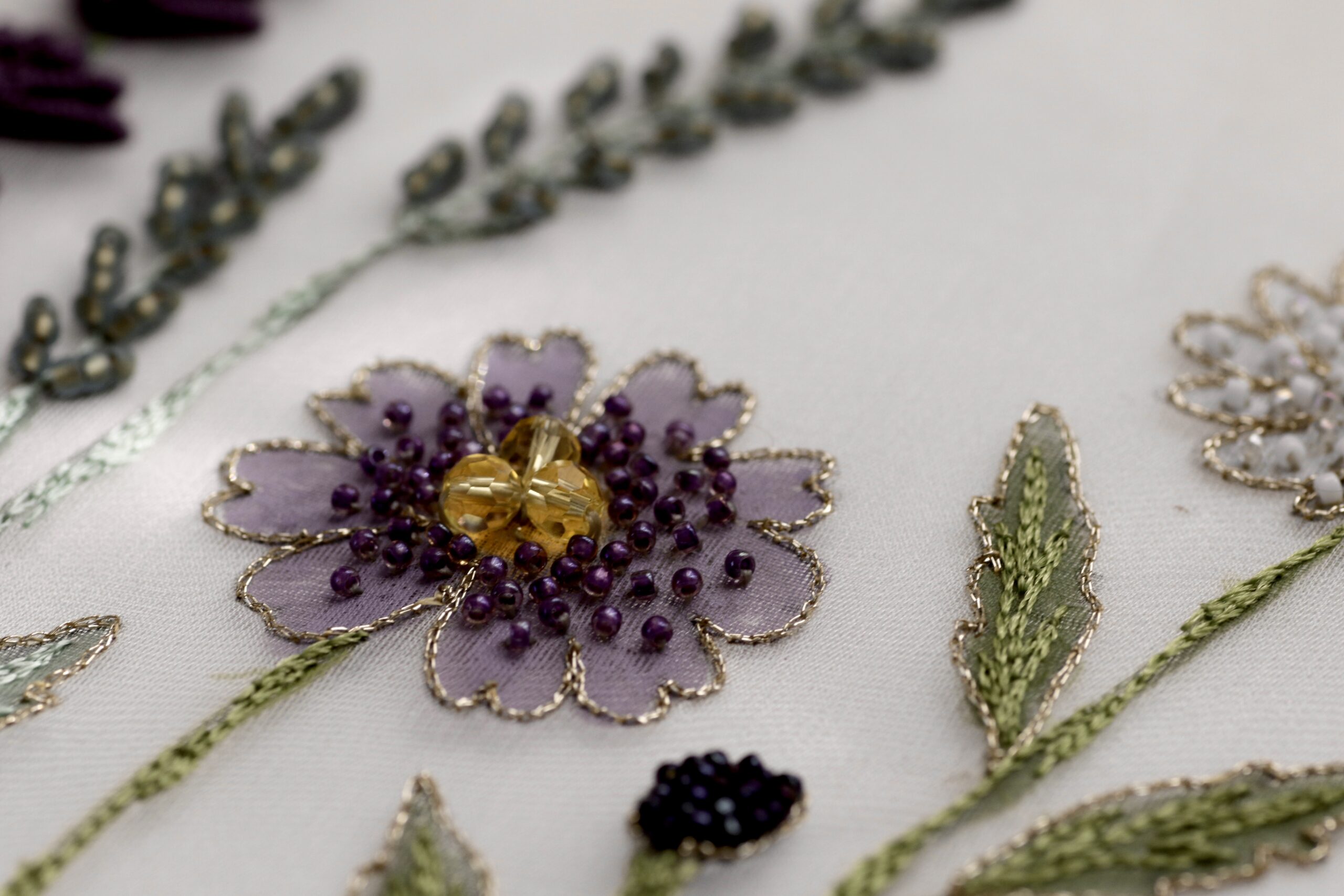
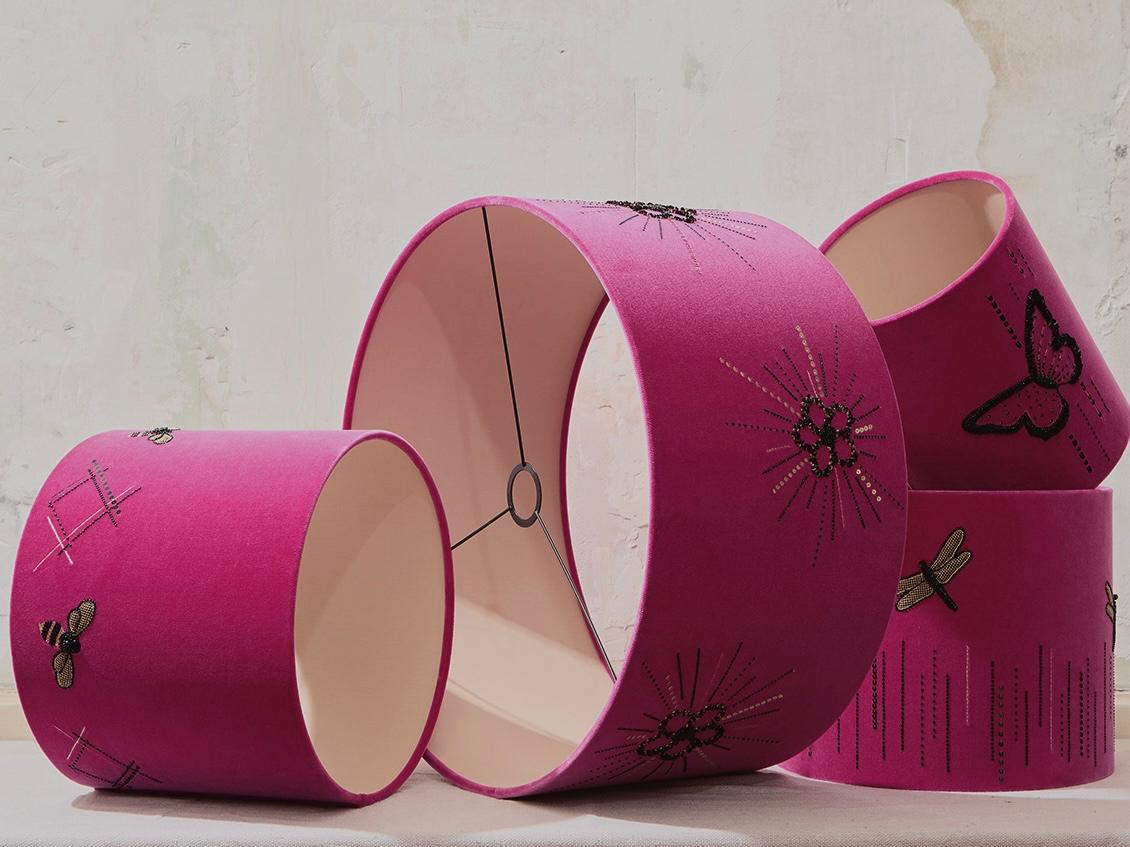
Embroidery often begins with something very simple: a piece of fabric, a needle, some thread, perhaps a handful of beads.
But it doesn’t have to end there.
One of the things I love most about embroidery is how many lives it can have. A finished piece can become something to wear, something to decorate our home, something to frame and keep, or simply a small detail that transforms an everyday object into something personal.
There are so many possibilities beyond the hoop.
Something to Wear
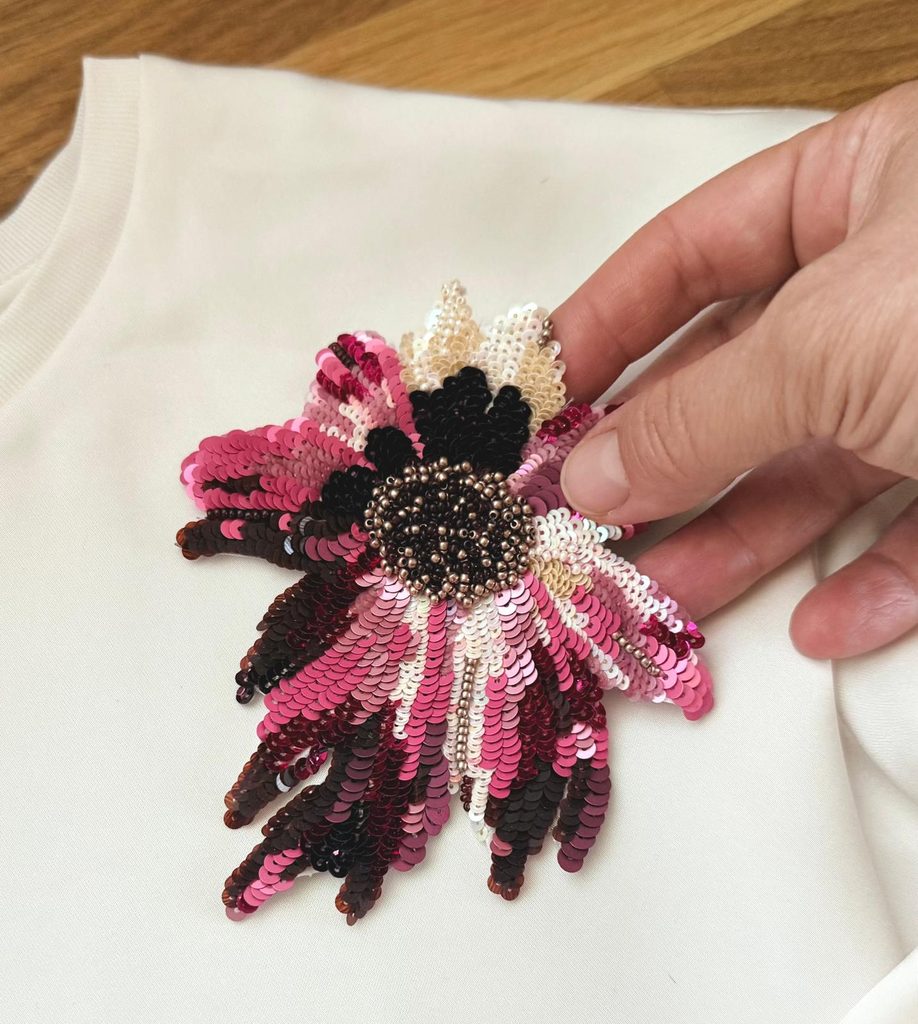
Embroidery and clothing have always belonged together. There is something very special about adding handwork to a garment — even the simplest shirt, jacket or dress can become personal when we add something made slowly by hand.
And the embroidery doesn’t necessarily have to be worked directly onto the garment. One of my favourite possibilities is creating an embroidered piece separately and using it as an appliqué. It gives us so much freedom. We can work comfortably on the embroidery, experiment with its placement afterwards, and decide exactly where it feels right before attaching it.
It also doesn’t need to be a large or elaborate design. A flower on a shoulder, a small branch near a collar, a beaded motif on a pocket or sleeve — sometimes a very small detail is enough to completely change the character of a garment.
I love this idea because it also gives embroidery another purpose. Instead of making something simply to practise a technique, we can create a little piece of art that eventually becomes part of something we actually wear.
Something to Wear as Jewellery
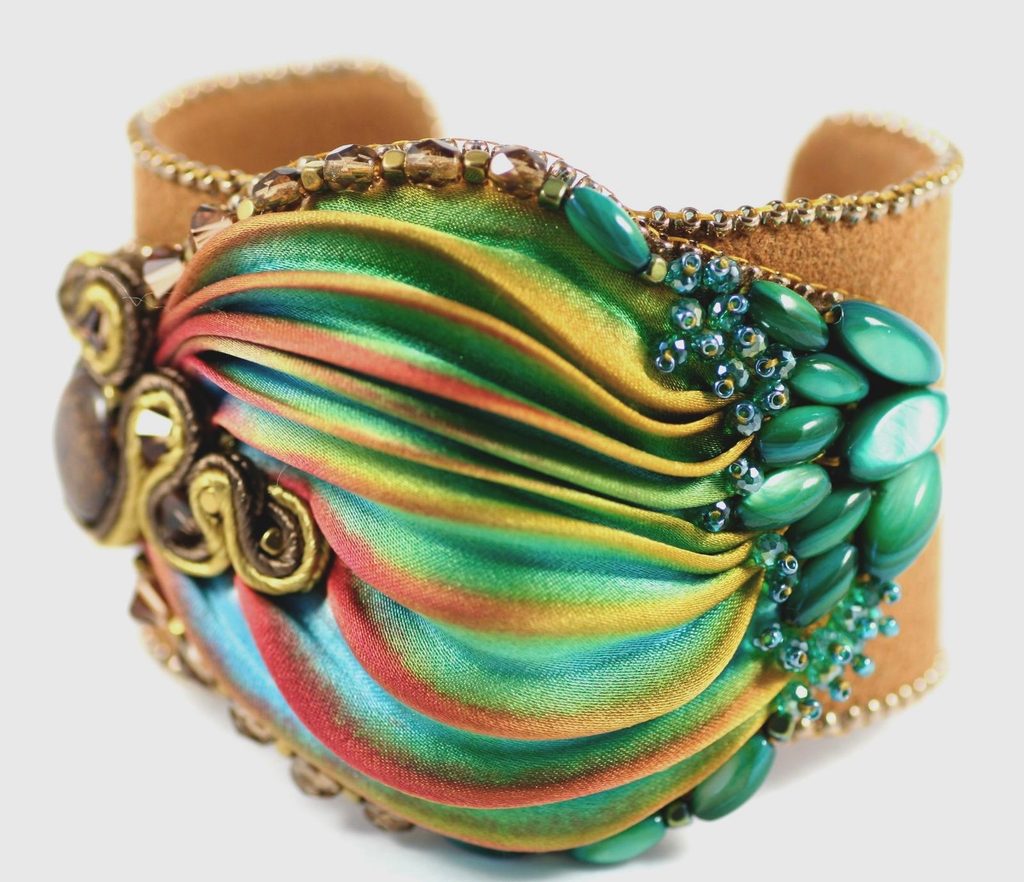
Embroidery can also become jewellery, and this is a possibility especially close to my heart. My own creative journey began with jewellery and beads before I discovered the world of couture embroidery, so for me these two crafts have always felt naturally connected.
I love how textile techniques can be taken away from their traditional setting and transformed into something completely different. Silk, tiny stitches, beads, crystals and metallic details can be layered and shaped into surprisingly sculptural pieces. An embroidered element can become a pair of earrings, a bracelet, a brooch or a pendant, but it can also grow into a statement piece where the boundaries between embroidery, textile art and jewellery almost disappear.
That is what I enjoy most about embroidered jewellery: you can take something created with needle, thread and fabric and turn it into a piece of art that you can actually wear.
Something for the Home
Embroidery can also leave the wardrobe entirely and become part of the spaces where we live.
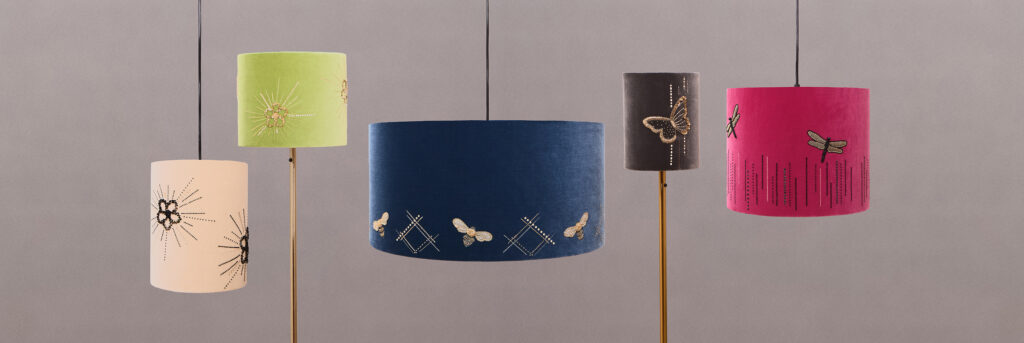
We often think first of cushions or traditional embroidered linens, but there are so many other possibilities: decorative panels, boxes, lampshades and all kinds of objects covered or embellished with fabric. I find it exciting to take embroidery away from where we expect to see it and place it somewhere a little more unexpected.
My embroidered lampshades are a good example of this. I think of them almost as functional art pieces. They are lampshades, so of course they have a practical purpose, but the embroidery turns them into objects that are also meant to be looked at and enjoyed as part of the room.
The embroidery on mine isn’t designed to suddenly appear when the lamp is switched on. The fabric and colours remain part of the object itself rather than being illuminated from behind. I actually like that very much. During the day, the lampshade can sit in a room almost like a little sculptural artwork, and in the evening it still has its practical purpose as a lamp.
Embroidery as Artwork
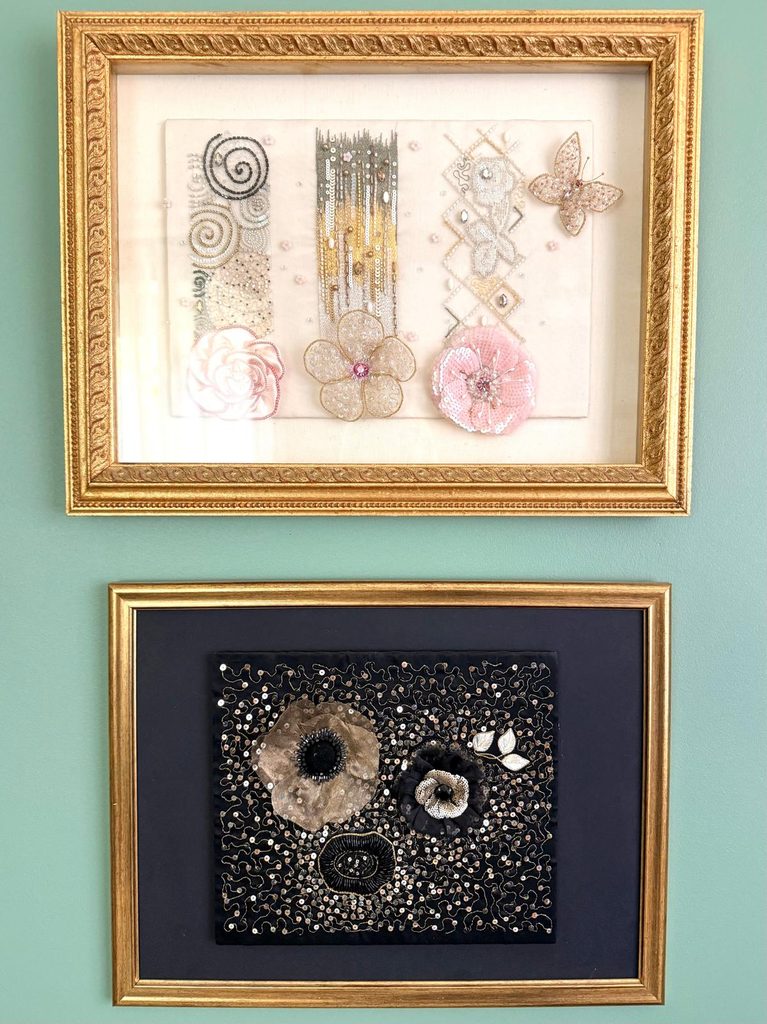
Embroidery deserves a place on our walls just as much as any other form of art. A finished piece carries hours of work, thought and creativity within it — from the first idea and choice of materials to every individual stitch. Threads, beads, sequins and different textures give textile art a depth and character that changes as the light moves across its surface.
And displaying embroidery can be as simple or as elaborate as you want it to be. Sometimes the hoop itself makes the perfect frame. A finished embroidery left in a beautiful wooden hoop has an honesty and simplicity that I love, and it can be hung directly on the wall as part of a collection or on its own.
For a different feeling, embroidery can be professionally framed or placed in a carefully chosen frame that becomes part of the artwork itself. The right frame can completely transform the way a piece is seen — giving it space, drawing attention to its colours and details, and allowing all those tiny stitches to really shine.
I especially love embroidery displayed this way because it invites you to look twice. From across the room you first see the composition, colours and shapes. Then, as you come closer, you begin to discover the individual stitches, beads, layers and textures. There is always something more to see.
There Are No Rules
Perhaps one of the most beautiful things about embroidery is that the technique is only the beginning.
A flower can become an appliqué, a piece of jewellery, part of a lampshade or a framed artwork. An idea can change along the way, and an unexpected material can lead somewhere completely new.
Learn the techniques, explore the materials, and then give yourself the freedom to experiment.
There really are no rules about what your embroidery can become.
Sometimes you can simply make something beautiful first.
Then let it tell you where it wants to belong.